
Bedroom lighting should do more than simply make the room bright enough to see. A good setup needs to work when you are getting dressed in the morning, reading in bed at night, relaxing before sleep, finding your way around after dark, or occasionally using the room for work.
That is why the best bedroom lighting usually comes from several light sources working together, rather than one powerful ceiling fixture. For most bedrooms, a practical starting point is to combine ambient lighting with task lighting and optional accent lighting. Warm-white light around 2700K to 3000K generally suits bedrooms well, while dimmers or multiple light levels make the room much more flexible.
This guide explains how to choose bedroom lighting based on brightness, color temperature, bedside placement, room size and how you actually use the space.
Quick Answer: How to Choose Bedroom Lighting
Start with three layers: ambient light for general brightness, task light for reading or dressing, and accent light for atmosphere. For most bedrooms, 2700K to 3000K is a useful warm-white range. Use multiple light sources instead of relying on one bright ceiling fixture, and add dimming or separate controls so the room can feel brighter in the morning and softer at night.
Start With How You Actually Use the Bedroom
Before buying lamps or bulbs, think about what happens in the room. A bedroom used almost entirely for sleeping needs a different lighting setup from one where you regularly read, work at a desk, apply makeup or get dressed.
Instead of asking, “What is the best bedroom light?”, ask: What activities need light in this room?
- A sleep-focused bedroom may only need soft ambient light and bedside lamps.
- A bedroom used for reading needs stronger, more directional task lighting near the bed.
- A bedroom that doubles as a workspace may need a brighter desk light while keeping the rest of the room warm and relaxing.
Separating these needs prevents one of the most common mistakes: trying to make a single ceiling fixture do everything.
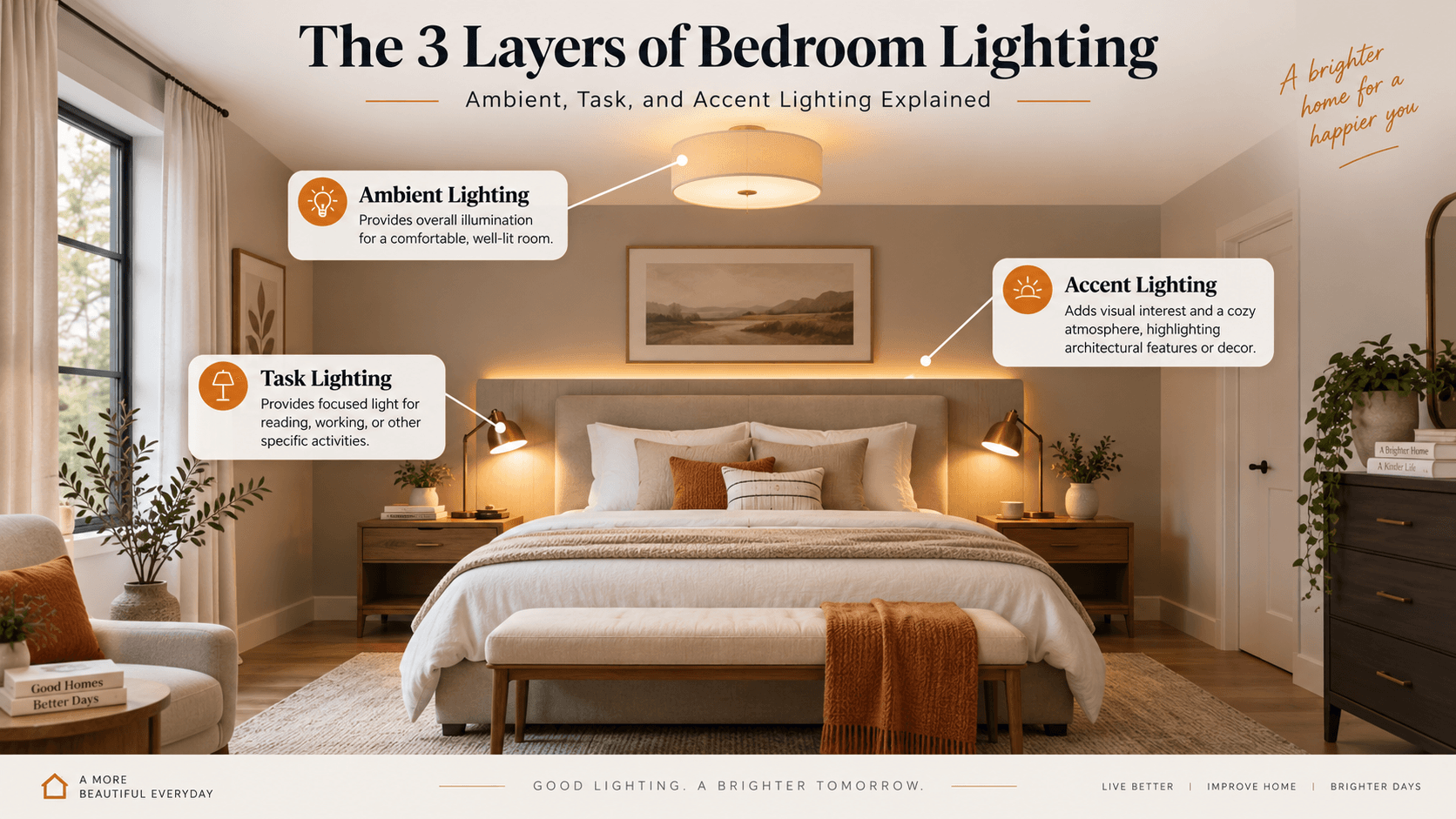
Use Three Layers of Bedroom Lighting
1. Ambient Lighting
Ambient lighting provides the room’s general illumination. This may come from a ceiling fixture, recessed lights, a pendant, wall lights or several lamps working together.
The goal is not necessarily to make every corner extremely bright. It should provide enough comfortable light to move around, organize the room and handle normal activities.
2. Task Lighting
Task lighting is focused light for specific activities. In a bedroom, this commonly includes bedside lamps for reading, a desk lamp, vanity lighting or focused lighting near wardrobes.
Task lights can often be brighter than the rest of the bedroom because they illuminate only the area where extra visibility is needed. If you prefer a movable bedside fixture, our best table lamps for bedrooms guide compares several bedroom-friendly options.
3. Accent Lighting
Accent lighting is mostly about atmosphere. It can highlight artwork, shelving or simply add a softer background glow. LED strips, decorative lamps and projection lighting can all work as accent lighting when used carefully.
For a more immersive room effect, our best galaxy projectors for bedrooms guide covers options designed mainly for ambience rather than general illumination.
How Bright Should Bedroom Lighting Be?
There is no single lumen number that works for every bedroom. Room size matters, but so do ceiling height, wall color, daylight, fixture design and how you use the space.
A useful rough planning range for general bedroom lighting is around 10 to 20 lumens per square foot. That gives you a simple starting calculation:
Bedroom area × 10 to 20 lumens = rough ambient-light starting range
| Bedroom Size | Rough Ambient Starting Range |
|---|---|
| 10 × 10 ft | 1,000 to 2,000 lumens |
| 10 × 12 ft | 1,200 to 2,400 lumens |
| 12 × 12 ft | 1,440 to 2,880 lumens |
| 12 × 15 ft | 1,800 to 3,600 lumens |
Treat these figures as a planning range, not a strict rule. A bedroom with pale walls and strong daylight may feel comfortable at the lower end. A darker room with deep wall colors or heavily shaded fixtures may need more.
The total light also does not need to come from one bulb. A ceiling fixture, two bedside lamps and a small accent light can create a more comfortable result than one extremely bright overhead source.
2700K vs 3000K: Which Is Better for a Bedroom?
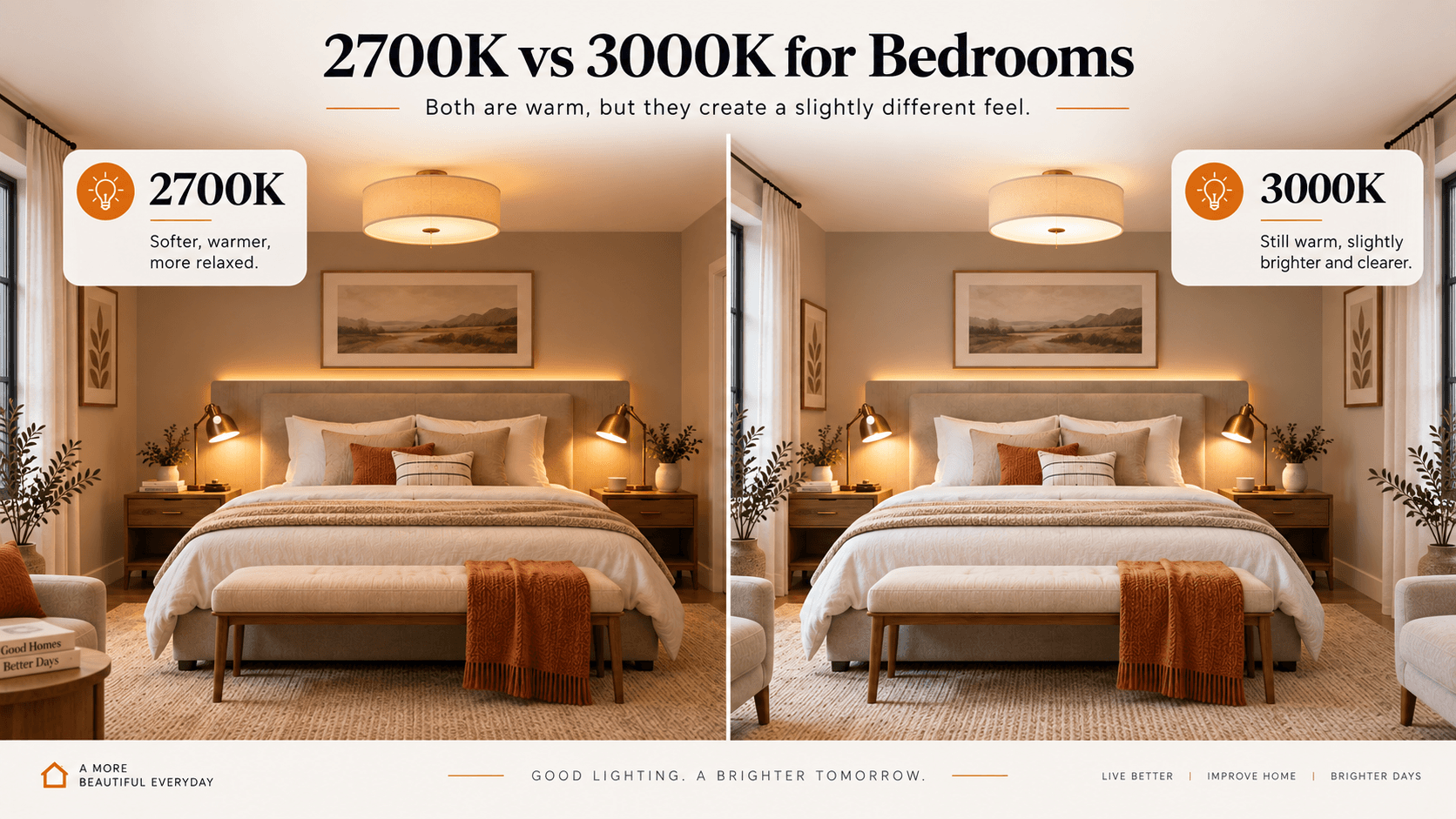
Color temperature changes how a room feels even when brightness stays the same. The U.S. Department of Energy describes lower color temperatures such as 2700K as warmer in appearance, while 3000K remains warm but looks slightly clearer. You can read more about light-bulb color temperature in the U.S. Department of Energy lighting guidance.
2700K
2700K light has a warm, slightly yellow appearance. It usually works well for bedrooms designed mainly around relaxation and sleep.
3000K
3000K is still warm light, but it appears a little cleaner and less yellow. It can be a good choice if you use the bedroom for dressing, reading or other activities where slightly clearer light is useful.
Which one should you choose?
For a sleep-focused bedroom, 2700K is usually the safer starting point. If you prefer warm lighting but want slightly clearer visibility, 3000K is a strong option.
You do not necessarily need the entire bedroom at one color temperature. A warmer bedside lamp can work alongside slightly brighter task lighting in a dressing or desk area.
How to Choose Bedside Lighting
Bedside lighting is one of the most important parts of a bedroom setup because it is often the last light you use at night.
The ideal bedside light should be easy to reach, comfortable from the bed and bright enough for whatever you actually do there. For general relaxing, a softer lamp may be enough. For regular reading, choose a lamp or wall light that directs light toward the book without shining directly into your eyes.
If both people sharing the bed have different routines, separate bedside lights are usually much more useful than relying on one shared source.
If you want app controls, voice assistants, schedules or adjustable colors, see our best smart bedside lamps for bedrooms guide.
How High Should a Bedside Lamp Be?
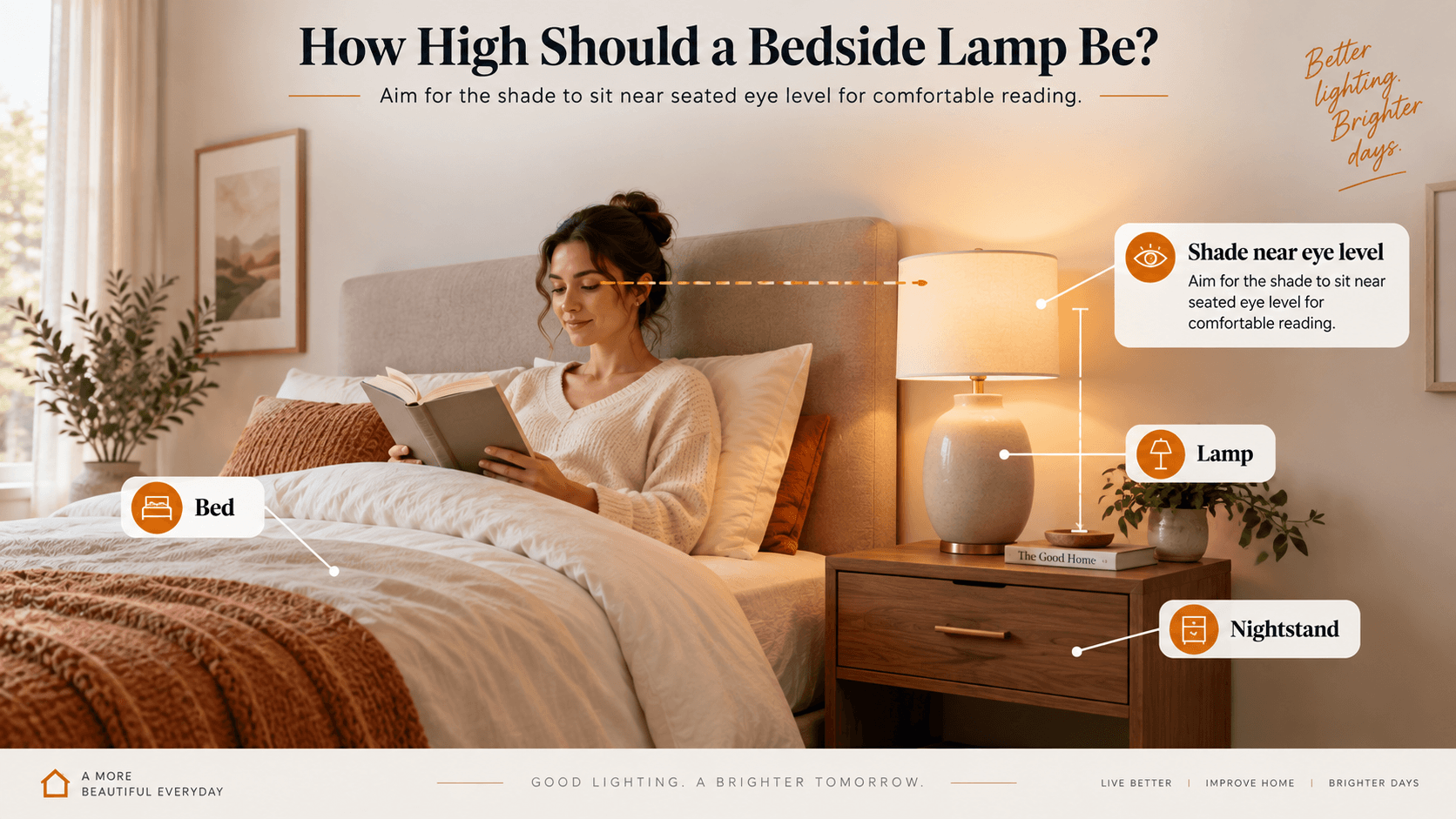
There is no single perfect lamp height for every bed and nightstand combination. What matters more is where the light source sits relative to your body when you are in bed.
For reading, the lower part of the lamp shade should generally sit around shoulder or eye level when you are seated upright. This helps direct light toward the page while reducing glare.
The nightstand itself matters too. A tall nightstand may work better with a shorter lamp, while a low table may need a taller lamp to bring the light source into a useful position.
Instead of choosing a lamp based only on its total height, consider the height of the bed, nightstand and shade together.
Best Bedroom Lighting for Reading in Bed
Reading requires more focused light than relaxing. A good reading light should illuminate the book clearly without making the entire room excessively bright.
Directional bedside lamps, adjustable wall sconces and reading lights near the headboard can all work. The key is placement. If the light is too high or too far away, you may need a much brighter bulb to compensate. If it is positioned correctly, a more moderate light level can be enough.
For couples, independently controlled reading lights are especially useful because one person can read without lighting the entire room.
Do Not Forget Nighttime Navigation
Sometimes the best bedroom lighting is not the brightest lighting. If you wake during the night, switching on a strong overhead light can feel harsh.
A low-level night light near the floor, hallway or doorway can provide enough visibility to move around without flooding the room with light. Motion-activated options can be particularly convenient because they only turn on when needed.
Our best night lights for bedrooms guide covers several options if nighttime navigation is an important part of your setup.
Dimmers and Smart Controls Make Bedroom Lighting More Flexible
A bedroom rarely needs the same brightness all day. Morning routines may need stronger light, while evening relaxation usually feels better with lower light levels. Reading may need focused task lighting while watching television may require only a small background light.
This is where dimmers and smart lighting become useful. Instead of choosing between a bright room and a dark room, you can adjust the same space for different situations.
Smart lighting can also add schedules, voice control, app control and automated bedtime routines. However, smart features are not automatically better. If you simply need a bedside lamp that turns on and off reliably, a standard lamp with a convenient switch may be the better and cheaper solution.
Can Bedroom Lighting Affect Sleep?
Light exposure in the evening can influence the body’s circadian system, including melatonin timing. Research reviews have found that evening light intensity and spectral composition can affect biological responses, although this does not mean a particular 2700K bulb will guarantee better sleep.
The practical takeaway is simple: keep evening lighting comfortable and avoid using unnecessarily intense light right before bed. If you want the science behind evening light and circadian responses, this peer-reviewed review on light exposure and circadian physiology provides useful background.
Lighting a Small Bedroom
Small bedrooms do not necessarily need fewer types of lighting. They simply need smarter placement.
Large floor lamps can waste valuable space, so compact bedside lamps, wall-mounted fixtures and simple ceiling lights may work better. Several smaller light sources can also make a small room feel more comfortable than relying on one bright fixture in the center.
Keep every fixture functional. If a decorative lamp takes up half the nightstand but does not provide useful light, it may not be the right choice for a compact bedroom.
Lighting a Larger Bedroom
Large bedrooms often need more than one lighting zone. A central ceiling fixture may illuminate the middle of the room while leaving the bed, seating area or wardrobe poorly lit.
Think of the room as several smaller areas. The bed may have bedside lamps. A reading chair may need a floor lamp. A dressing area may need brighter task lighting. Accent lighting can then connect these areas visually without requiring every fixture to be equally bright.
Common Bedroom Lighting Mistakes
- Relying on one overhead fixture: it may provide enough lumens, but it cannot provide ideal light for every task.
- Choosing bulbs only by wattage: brightness in lumens and color temperature are more useful planning factors.
- Ignoring bedside lamp height: poor placement can create glare or weak reading light.
- Making the whole room overly bright: targeted task lighting is often better than increasing brightness everywhere.
- Buying purely for appearance: a decorative fixture still needs a clear purpose in the room.
Three Practical Bedroom Lighting Setups
Small Bedroom Mainly Used for Sleep
Use a warm ambient ceiling light, one or two compact bedside lamps and an optional low-level night light. Keep the setup simple and easy to control from the bed.
Bedroom Used for Sleep and Reading
Use dimmable ambient lighting for general use, plus a directional lamp on each side of the bed. The bedside lighting should provide enough focused illumination for reading without forcing the entire room to stay bright.
Bedroom Used for Sleep, Dressing and Occasional Work
Use warm ambient lighting throughout the room, then add a brighter focused task source at the desk, vanity or dressing area. This keeps functional light where you need it without making the whole bedroom feel overly bright.
Quick Bedroom Lighting Checklist
- Do you have comfortable general ambient light?
- Is there focused task lighting for reading, dressing or work?
- Can you lower the brightness in the evening?
- Does the color temperature suit how you use the room?
- Are bedside lights easy to reach?
- Is each fixture solving a real lighting problem?
The best bedroom lighting plan is rarely the one with the most fixtures. It is the one where each light has a clear purpose.
Frequently Asked Questions
What type of lighting is best for a bedroom?
A layered setup usually works best. Combine general ambient lighting with focused task lighting near the bed or dressing area, then add accent lighting only if you want additional atmosphere.
Is 2700K or 3000K better for a bedroom?
Both can work. 2700K produces a softer, warmer appearance that suits relaxing bedrooms, while 3000K remains warm but provides slightly clearer-looking light for activities such as reading or dressing.
How many lumens does a bedroom need?
A rough planning range for ambient bedroom lighting is around 10 to 20 lumens per square foot. The actual requirement depends on room colors, daylight, fixture design, ceiling height and how the bedroom is used.
Should a bedroom have one light or multiple lights?
Multiple light sources are usually more practical. One ceiling fixture may provide general brightness, but separate bedside and task lighting lets you use the room comfortably without turning everything on.
How high should a bedside lamp be?
Instead of following one fixed height, position the lamp so the shade and light source sit at a comfortable level when you are sitting in bed. For reading, the light should illuminate the page without shining directly into your eyes.
Can bedroom lighting affect sleep?
Evening light exposure can influence the body’s circadian system. Keeping evening lighting lower and avoiding unnecessarily intense light may help create a better wind-down environment, but lighting alone cannot guarantee better sleep.
Final Thoughts
Choosing bedroom lighting becomes much easier when you stop searching for one “perfect” fixture. Start with comfortable ambient light, then add task lighting where the room actually needs it. Use warm color temperatures for the main bedroom environment, make brightness adjustable when possible, and treat decorative lighting as the final layer rather than the foundation.
A good bedroom lighting setup should work differently at 8 a.m., 8 p.m. and 2 a.m. If your lighting can support all three situations comfortably, you are probably on the right track.
Pingback: 7 Best Plug In Wall Sconces for Bedrooms in 2026: Renter-Friendly Picks - ZOM5